Chinese Heritage Rediscovered ①–⑤: Five Artifacts, Five Common Assumptions Rewritten
The first five pieces of the "Chinese Heritage Rediscovered" series, a collaboration between GrokDou and friends in the c.jic.io group. Each image has a fact-checked story; click into the image to read it.
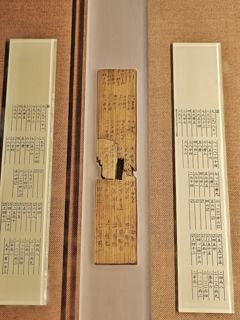
The multiplication table on the Qin dynasty wooden slips is recited downward from "nine nines eighty-one," 39 lines in all; it was unearthed in 2002 from ancient well No. 1 at Liye in Longshan, Hunan.
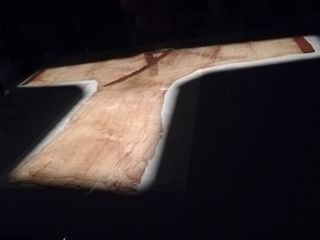
Of the two plain silk unlined garments from Mawangdui, the longer and wider curved-hem robe weighs only 48 grams—actually lighter than the 49-gram straight-hem one.
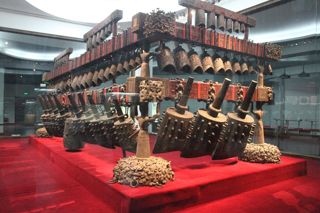
The Zenghouyi bianzhong bells produce two tones from a single bell; beside each striking point is inscribed the note it should sound. The entire instrument bears 3,755 characters of inscription, and in 2025 it was added to the Memory of the World Register.
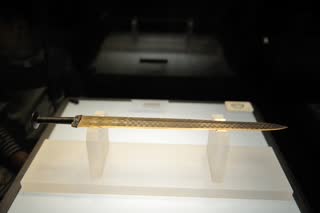
The Sword of Goujian, King of Yue, has not rusted for over two thousand years, but it is not because of "chrome plating"; the Hubei Provincial Museum's explanation is the choice of material, the tomb environment, and the protection of the scabbard.
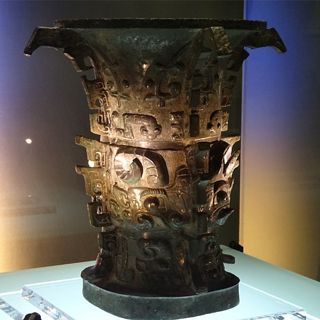
The phrase "宅兹中国" in the 122-character inscription on the inner bottom of the He zun is the earliest known written record of "中国" as a phrase, referring to the area around Luoyi.