Why Jo-an in Urakuen is famous
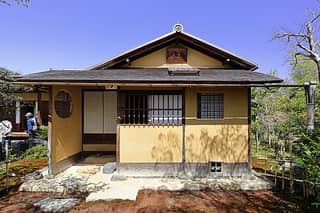
The 2023 photo is the National Treasure tea house Jo-an, built by Oda Urakusai in Kyoto and moved in 1972 to Urakuen at Gomonsaki, Inuyama.
The 2023 photograph shows Jo-an (如庵), a National Treasure tea house, standing in Urakuen garden at Gomonsaki (御門先), Inuyama, Aichi. It is famous because it is one of Japan’s three National Treasure tea rooms, with Tai-an and Mittan, and the only one whose exterior can be seen up close on an ordinary visit.
Oda Urakusai (Oda Nagamasu), younger brother of Oda Nobunaga and a student of Sen no Rikyū, built Jo-an around 1618 at Shōden-in, a subtemple of Kennin-ji in Kyoto. The room is tiny, about two and a half tatami, with Rikyū-style restraint: a low nijiriguchi crawl-in door, a katō-mado window, and a layout that forces guests to bow and look at the garden rather than at display. It was named a National Treasure in 1951.
After the Meiji period the building passed through the Mitsui family. In 1972 Nagoya Railroad received it and rebuilt it east of Inuyama Castle on the former amusement-park ground. Architect Sutemi Horiguchi supervised the move and the garden, which was named Urakuen after Uraku. The old Shōden-in study (an Important Cultural Property) came with it. Gen-an is a reconstruction; matcha is served next door at Koan, not inside Jo-an itself.
The photo’s place name is the same address the garden still uses: 1 Gomonsaki, Inuyama. From Meitetsu Inuyama-Yuen station it is about an eight-minute walk, beside the castle. That combination — a Rikyū-lineage room that survived Kyoto, a Mitsui collection piece, and a Meitetsu garden under the castle — is why this small wooden box is famous.
