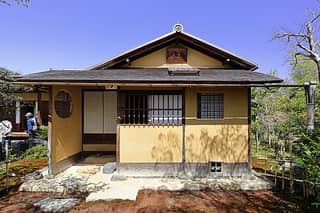
Joan: A National Treasure Teahouse Built by Oda Nobunaga's Younger Brother
Joan, located within Urakuen, is one of only three surviving teahouses in Japan designated as National Treasures. It was founded around 1618 by Oda Urakusai, a daimyo tea master and the younger brother of Oda Nobunaga, designated a National Treasure in 1936, and relocated to Inuyama City, Aichi Prefecture, in 1972.
Jo-an is one of the most prestigious tea houses in the history of Japanese tea ceremony, listed alongside Sen no Rikyū's Taian (Myokian at Ōyamazaki) and Daitoku-ji Ryōkō-in's Mittan as the only three surviving National Treasure tea houses (the three National Treasure tea seats).
It was founded by Oda Urakusai (Oda Nagamasu, 1547–1622), the younger brother of Oda Nobunaga and a daimyo tea master. Urakusai studied under Sen no Rikyū and was counted among the "Rikyū Ten Philosophers"; in his later years he retired to Shōden-in within Kennin-ji in Kyoto, where he built Jo-an around 1618 (Genna 4).
Jo-an is a small tea room of two-and-a-half mats plus a daime, yet full of ingenuity: details such as the diagonal "sujikai no koi," the "koyomi-bari" papered with old calendar pages, and the bamboo-woven "Yuraku-mado" window all embody Urakusai's original tea aesthetic. Designated a National Treasure in 1936 (Shōwa 11), it is an extremely precious surviving structure in the cultural history of the tea ceremony.
Jo-an was subsequently relocated several times: at the end of the Meiji era it was moved to the Mitsui main residence in Tokyo, in 1938 to the Mitsui family's Ōiso villa "Jōsansō," and in 1972 (Shōwa 47) it was moved by Meitetsu to its present site at the eastern foot of Inuyama Castle, with architect Hiroshi Horiguchi invited to supervise, creating "Urakuen," which recreates the Kyoto-period garden. Today it forms, together with the National Treasure Inuyama Castle, the most representative historical and cultural landscape of Inuyama City, and is the only National Treasure tea house that can be viewed up close year-round.