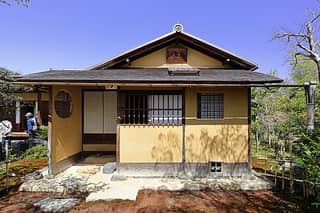
Why Jo-an in Urakuen is famous
Jo-an in Urakuen, Inuyama, is a National Treasure tea house built about 1618 by Oda Uraku, brother of Nobunaga and a Rikyū disciple. It is one of only three National Treasure tea rooms in Japan.
The 2023 photograph titled “Joan in Urakuen, Gomonsaki, Inuyama” shows Jo-an (如庵), not a person named Joan. Jo-an is a tiny rustic tea house in Urakuen garden, beside Inuyama Castle in Aichi. It is famous because it is one of only three tea rooms in Japan designated a National Treasure, together with Tai-an at Myōki-an and Mittan at Daitoku-ji’s Ryōkō-in. It was built about 1618 at Shōden-in, a subtemple of Kennin-ji in Kyoto, as the retirement retreat of Oda Uraku (Nagamasu), younger brother of Oda Nobunaga and a disciple of Sen no Rikyū who founded the Uraku school of tea. The name is written 如庵; some writers also connect the reading Joan to Uraku’s Christian baptismal name. The room is a sōan of about two and a half mats plus a daime. Its signature details are the packed-bamboo Uraku window, calendar-paper wainscoting (koyomibari), and a freer, slightly playful reading of wabi tea architecture. After the Meiji period it passed through private hands, including the Mitsui family, which helped it survive the destruction of wartime Kyoto. In 1971–72 Meitetsu moved it to Inuyama, where architect Horiguchi Sutemi laid out Urakuen so the public could see it. Most visitors see the exterior; the fragile interior is usually shown only by reservation. That scarcity, the Oda–Rikyū lineage, and National Treasure rank are why this small building is famous.