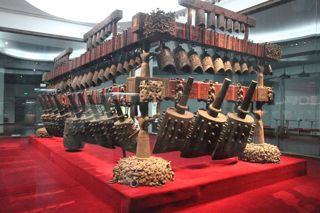
One bell strikes two tones: the 3,755-character "instruction manual" on the Zenghouyi bells
The set of 65 bianzhong bells unearthed in 1978 from the tomb of Marquis Yi of Zeng at Leigudun, Suizhou, Hubei, can each strike two tones, and beside every striking point is inscribed the note that point should produce. The inscriptions across the whole set total 3,755 characters (2,828 of them on the bell bodies), and they also record how these note names correspond to the pitch systems of Chu, Zhou, Qi, Shen and other states. On April 17, 2025, it was inscribed on UNESCO's Memory of the World Register as "the only surviving acoustic-textual music-theory archival document from the 5th century BCE anywhere in the world."
1957 年,河南信阳一座楚墓出土 13 枚编钟,当时人们的认识还停在「一钟一音」。20 世纪 70 年代中期,黄翔鹏等音乐文物专家跑遍各地研究出土编钟,才首次提出「一钟双音」的初探。真正让世人普遍认可的,是 1978 年在湖北随州擂鼓墩曾侯乙墓出土的这套编钟。
冷细节在铭文上。据参与发掘的冯光生回忆,黄翔鹏当时就断言:每件钟上都能找到两个不同的音,而且每个音的敲击点旁都刻有铭文,铭文正好和发出的音吻合。也就是说,乐器自带了说明书。全器铭文共 3755 字,其中钟体 2828 字,其余刻在钟架横梁(187 字)和挂钟构件(740 字)上(三处合计 2828+187+740=3755)。它们不只标出每件钟的音名,还写清这些音名与楚、周、齐、申等国律调怎么对应。
这套编钟 65 件:19 件钮钟、45 件甬钟、1 件镈钟(楚惠王熊章所赠),分 3 层 8 组,挂在曲尺形的铜木钟架上,由 6 个青铜佩剑武士承托。墓室出土时灌满了水,水落钟出,钟架历经 2400 多年仍屹立不倒。音域自 C2 至 D7,跨五个八度又一个大二度(馆方常说「五个半八度」),十二个半音齐备,可以旋宫转调。1978 年 8 月 1 日,编钟出土后的第一场音乐会在随州一座礼堂举行,奏的是《东方红》。
2025 年 4 月 17 日,联合国教科文组织宣布《随州曾侯乙编钟》文献遗产列入《世界记忆名录》。官方的说法是:这是「目前世界仅存的公元前 5 世纪声文对应的乐律档案文献」,3755 字铭文「以声音和文字相互印证的方式保存了 2400 多年前人类的音乐记忆」。
- 新华社 2025-04-18《人类音乐史奇迹 随州曾侯乙编钟入选〈世界记忆名录〉》:信阳 13 枚、黄翔鹏「一钟双音」、冯光生回忆敲击点铭文、3755 字、3 层 8 组、1978-08-01 首场音乐会《东方红》
- 中央网信办转载长江云 2025-04-21:「目前世界仅存的公元前 5 世纪声文对应的乐律档案文献」
- UNESCO Memory of the World Register 2025
- 湖北省博物馆·镇馆之宝·曾侯乙编钟:65 件(上层 19 件钮钟、中下层 45 件甬钟、1 件楚惠王所赠镈钟),三层八组曲尺形铜木钟架,钟及架、钩铭文 3755 字,每钟双音,十二个半音齐备
- 维基百科「曾侯乙编钟」(引谭维四 2001):钟体铭文 2828 字、挂钟构件铭文 740 字、音域 C2–D7 跨五个八度又一个大二度
- 配图:Gary Todd 摄于湖北省博物馆,CC0
.jpg)