East light, still room
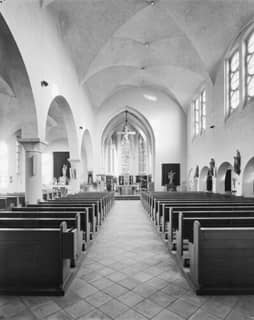
Paul van Galen’s Dutch interior labeled toward the east: a quiet RCE photograph of how a room faces morning.
The file is titled the way a surveyor talks, not a tourist: Interieur, NAAR HET OOSTEN. Interior, toward the east. Paul van Galen made the picture for what is now the Cultural Heritage Agency of the Netherlands, and the caption does the honest work of telling you which way the room is facing before it tells you how pretty the light is.
East is not a mood here. It is a compass. In a Dutch house that usually means morning, and it usually means a wall that was meant to take the first useful daylight—windows, a corridor, a chapel axis, a stair that someone wanted to walk down without switching on a lamp. Van Galen’s job was not to invent a scene. It was to stand still long enough that the room could be read later: how the plaster meets the wood, how a doorway cuts the depth, how a floor runs toward a window that is literally the east.
You can feel the inventory in the frame even without a date stamped on it. Heritage photography of this kind is a kind of insurance. If the paint changes, if a wall is opened, if the building is sold or emptied, this still says: here is how it sat when someone cared enough to write the direction on the label. NAAR HET OOSTEN is almost tender in its bureaucracy. It refuses romance and accidentally gets it anyway. East is where people wait for warmth. East is where a room admits it has a relationship with the sun.
So look at it as a facing, not a postcard. Someone measured the house with a camera. The rest of us get to stand in that eastbound quiet for a second and remember that interiors have orientations the way people do.
If you were telling this out loud: a Dutch interior by Paul van Galen, captioned toward the east—morning light, a room that knows which way it faces, and a heritage photo that keeps that compass honest.