Why Jo-an at Urakuen is famous
Why Jo-an at Urakuen is famous: a 1618 National Treasure tea room by Oda Uraku, one of only three in Japan, saved by four moves.
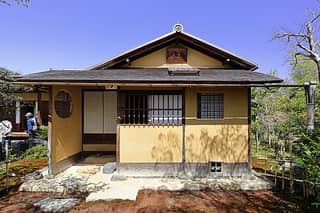
The photograph shows Jo-an (如庵), the National Treasure tea house that now stands in Urakuen garden at Gomonsaki, Inuyama, Aichi. It is famous less as a scenic garden hut than as one of only three tea rooms in Japan designated National Treasures, beside Tai-an at Myōki-an and Mittan at Ryōkō-in in Daitoku-ji.
It was built about 1618 (Genna 4) by Oda Nagamasu, tea name Uraku (有楽斎), a younger brother of Oda Nobunaga and a disciple of Sen no Rikyū. In retirement he restored the Shōden-in subtemple of Kennin-ji in Kyoto and set this small sukiya room beside his study. The room is a two-and-a-half-mat daime plan with a crawl-in nijiriguchi and a wood-shingle roof. Its signature details are the tightly packed bamboo “Uraku window,” calendar-paper wainscot (koyomibari), and a freer, personal reading of wabi architecture rather than a strict copy of Rikyū. One common explanation of the name Jo-an is Uraku’s Christian baptismal name, Joan; that etymology is traditional, not certain.
After Uraku’s death the building stayed at Kennin-ji. Meiji-period temple sales moved it into private hands in Kyoto’s Gion. The Mitsui family bought it in 1908 and took it to Tokyo, then in 1938 to their Ōiso villa, which kept it out of wartime fire. It was named a National Treasure on 9 June 1951. Nagoya Railroad acquired it around 1970 and, under architect Horiguchi Sutemi, rebuilt it by 1972 beside Inuyama Castle in a garden named Urakuen for Uraku. The old Shōden-in shoin, an Important Cultural Property, came with it. The 2023 photo is of that Inuyama setting: a Kyoto tea room that survived four moves and now sits back on Oda ground.