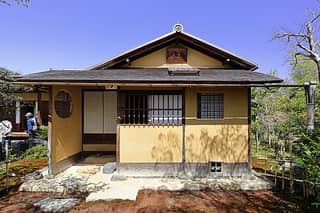
Why Jo-an at Urakuen is famous
Jo-an at Urakuen, Inuyama, is a 1618 tea house by Oda Uraku, a National Treasure since 1951 and one of Japan's three finest surviving chashitsu. It has stood in this garden since 1972.
The 2023 photograph shows Jo-an (如庵), a seventeenth-century chashitsu, standing in Urakuen garden at Gomonsaki, Inuyama, Aichi, just east of Inuyama Castle. It is famous because it is one of only three tea rooms in Japan designated a National Treasure, grouped with Tai-an and Mittan as the three great National Treasure tea seats. English Wikipedia records that Jo-an was designated a National Treasure in 1951 and has stood in its present Inuyama location since 1972.
It was built in 1618 at Shoden-in, a subtemple of Kennin-ji in Kyoto, by Oda Uraku (Oda Nagamasu, 1547–1622), younger brother of Oda Nobunaga and a student of Sen no Rikyu. Japan Guide notes that the house moved with the Shoden-in Shoin study, and that Urakuen, named for Uraku, was laid out around both buildings when they arrived in Inuyama. Visitors normally see the thatched tea house from the garden path rather than sitting inside it; matcha is served in the separate Ko-an tea house on the same grounds.
What makes the room itself matter, beyond the label, is that it is a late, personal reading of Rikyu's small-room tea. Jo-an is a nijo-daime layout, about two and a half tatami plus a daime and tokonoma, entered through a nijiriguchi. Its signature details are the Uraku window of tightly bound bamboo and the calendar-paper wainscot, koyomibari, made from old printed calendars. The photo's quiet garden setting is therefore not the original Kyoto temple yard. The building was sold into private hands, kept by the Mitsui family through the war, and only then reconstructed beside the castle town that still carries the Oda name. That survival, plus Uraku's own hand, is why this small hut is famous.