Why Jō-an matters: a tea house with a travelling history
Oda Uraku’s 1618 tea house, its distinctive design, and why its present garden is not its original setting.
Why Jō-an matters: a tea house with a travelling history
Jō-an, the tea house at Urakuen in Inuyama, is famous for more than its age. It connects an influential tea practitioner, distinctive architectural design, and the deliberate preservation of a building across several relocations.
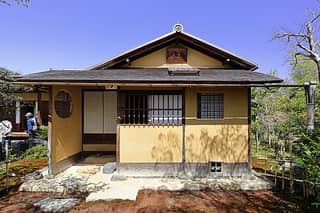
Japan's national tourism organization dates it to 1618 and identifies its creator as Oda Uraku, younger brother of Oda Nobunaga and a student of Sen no Rikyu. It began in Kyoto, in the Kenninji temple complex—not in the garden where visitors encounter it today. Aichi Prefecture's tourism account traces its later journey through Tokyo and Kanagawa before its arrival in Inuyama in 1972. That distinction matters: a photograph taken here in 2023 records a seventeenth-century building in a later setting, not a building constructed in 2023.
Its reputation also rests on design. The owner, Meitetsu, points to the distinctive Uraku windows, a diagonal wall and the arrangement of a central post. These are concrete features to look for, rather than treating the room as merely an old hut. My interpretation is that its importance becomes clearer when architecture is understood as arranging attention: light, angles and the relation between people matter as much as size.
Aichi's official account gives 1951 as its National Treasure designation. The Japan Tourism Agency identifies it as one of only three tea houses with that recognition, and explains that Urakuen was created specifically to provide a setting for it. The garden is therefore part of the story of preservation, not evidence that the tea house has always stood here.
There is an important visiting distinction, too. Meitetsu says the interior is normally closed, with access through special viewings. Seeing the garden is not the same as entering Jō-an. In short, it is famous as a surviving work of tea architecture associated with Oda Uraku, whose carefully designed small space has been preserved through a remarkably mobile history.