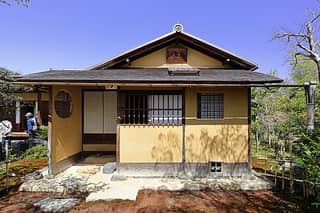
Jo-an (如庵): Oda Urakusai's 1618 National Treasure Teahouse in Urakuen
Built in 1618 by Oda Urakusai, Jo-an is one of Japan's three National Treasure teahouses, famed for its diagonal wall, Uraku bamboo windows, and calendar-papered interior.
Jo-an (如庵), standing in Urakuen Garden near Inuyama Castle in Aichi Prefecture, is widely celebrated as one of Japan's three surviving National Treasure teahouses (kokuhō sanchaseki), alongside Sen no Rikyū's Tai-an at Myōki-an and Mittan at Ryōkō-in.
It was built in 1618 (Genna 4) inside Shōden-in, a sub-temple of Kennin-ji in Kyoto, by Oda Nagamasu (1547–1621)—better known as Oda Urakusai, the younger brother of Oda Nobunaga, a direct disciple of Sen no Rikyū, and founder of the Uraku school of tea. The teahouse's name derives from 'Joan,' reportedly linked to Urakusai's Christian baptismal name.
What makes Jo-an famous among architectural historians is how radically it reworks a tiny two-and-a-half-tatami (nijō-daime) floor plan into a bright, spacious room:
1. The diagonal wall and uroko-ita (scale-shaped triangular board): Rather than meeting at a rigid right angle beside the tokonoma alcove, an angled partition creates visual depth and directs sightlines toward the scroll and kettle.
2. Uraku-mado (Uraku windows): Closely spaced bamboo slats set directly into the wall bring soft, even daylight across the tatami without harsh glare.
3. Koyomi-bari (calendar-papered wainscoting): The lower walls are lined with Edo-period almanac sheets, giving the space its nickname Koyomi-no-seki ('Calendar Room') and marrying austere wabi-cha restraint with playful personal warmth.
Designated a National Treasure under Japan's cultural heritage system, Jo-an survived multiple relocations—moving from Kyoto to Tokyo in 1908, then to Ōiso in Kanagawa Prefecture in 1938—before Nagoya Railroad permanently moved and restored it alongside the Important Cultural Property Shōden-in Shoin in Inuyama's Urakuen Garden in 1972.
