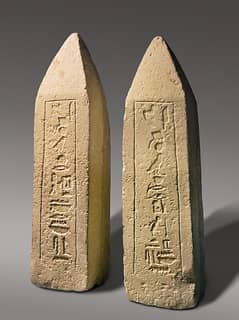
ネブセンの一対のオベリスクの解説
それらはネブセンの墓の入り口のそばで二人の霊的な守護者のように機能し、彼の名を刻み、彼が来世に到達するのを助けた。
The*Pair of Obelisks of Nebsen consists of two small limestone monuments made in ancient Egypt during the Late Old Kingdom, around 2323–2100 BCE.
They were funerary objects rather than huge public monuments. The pair probably stood on either side of the entrance to the tomb chapel of Nebsen, an important Egyptian official. At about 52 cm tall, they are closer to tabletop monuments than famous obelisks such as Cleopatra’s Needle.
The hieroglyphic inscriptions:
- identify Nebsen and dedicate the monuments to him;
- mention Ptah-Sokar and Osiris, gods connected with death, burial and rebirth;
- were intended to help Nebsen receive divine protection and continue living in the afterlife.
Their pointed tops also had solar meaning. Obelisks were associated with the sun and its daily return, so they represented ideas of **renewal, resurrection and eternal life**. Their placement as a pair created a sacred entrance into Nebsen’s funerary chapel.
In simple terms, they acted like two spiritual guardians beside Nebsen’s tomb entrance, carrying his name and helping him reach the afterlife.
The inscriptions contain unusual details that once caused scholars to question whether the objects were genuinely ancient. According to later research cited by the Met, they are now considered authentic examples of early private funerary obelisks.